Sleep terror disorder
Definition
Sleep terror disorder is defined as repeated temporary arousal from sleep, during which the affected person appears and acts extremely frightened.
Description
Sleep terror disorder is sometimes referred to as pavor nocturnus when it occurs in children, and incubus when it occurs in adults. Sleep terrors are also sometimes called night terrors, though sleep terror is the preferred term, as episodes can occur during daytime naps as well as at night. Sleep terror is a disorder that primarily affects children, although a small number of adults are affected as well.
Causes and symptoms
Causes
The causes of sleep terror are for the most part unknown. Some researchers suggest that sleep terrors are caused by a delay in the maturation of the child's central nervous system. Such factors as sleep deprivation, psychological stress , and fever may also trigger episodes of sleep terror.
Symptoms
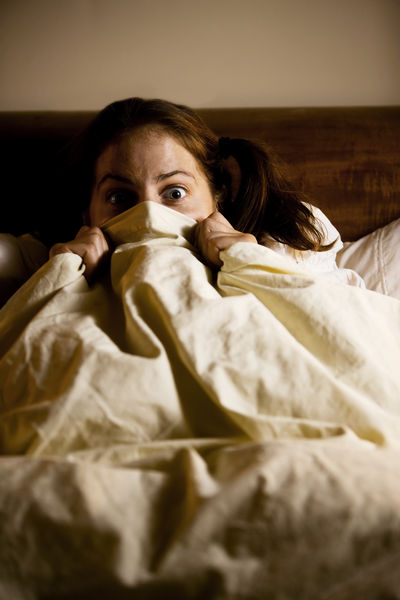
The symptoms of sleep terror are very similar to the physical symptoms of extreme fear. These include rapid heartbeat, sweating, and rapid breathing (hyperventilation). The heart rate can increase up to two to four times the person's regular rate. Sleep terrors cause people to be jolted into motion, often sitting up suddenly in bed. People sometimes scream or cry. The person's facial expression may be fearful.
People experiencing sleep terror disorder sometimes get out of bed and act as if they are fighting or fleeing something. During this time injuries can occur. Cases have been reported of people falling out of windows or falling down stairs during episodes of sleep terror.
People experiencing sleep terror are not fully awake. They are nearly impossible to bring to consciousness or comfort, and sometimes respond violently to attempts to console or restrain them. In many cases, once the episode is over the person returns to sleep without ever waking fully. People often do not have any recollection of the episode after later awaking normally, although they may recall a sense of fear.
Episodes of sleep terror usually occur during the first third of a person's night sleep, although they can occur even during naps taken in the daytime. The average sleep terror episode lasts less than 15 minutes. Usually only one episode occurs per night, but in some cases terror episodes occur in clusters. It is unusual for a person to have many episodes in a single night, although upwards of 40 have been reported. Most persons with the disorder have only one occurrence per week, or just a few per month.
Demographics
Sleep terror disorder is much more common in children than it is in adults. It is estimated that approximately 1%–6% of children in the United States experience sleep terror at some point in their childhood. For most children, sleep terrors begin between the ages of four and 12. The problem usually disappears during adolescence. Sleep terror disorder appears to be more common in boys than in girls; some studies have reported that preadolescent boys are the group most commonly affected. No figures are available for the rates of the disorder in different racial or ethnic groups. Sleep terrors in children are not associated with any psychological disorders.
Fewer than 1% of adults have sleep terror disorder. For most adults, sleep terrors begin in their 20s or 30s, although it is possible for someone to suffer from episodes of sleep terror from childhood onward. In the adult population, sleep terrors affect both sexes equally. They are, however, often associated with psychological disorders, most commonly anxiety, personality, or post-traumatic disorders. People who have a family history of sleep terrors or sleepwalking disorder are about 10 times more likely to develop sleep terror disorder than those who do not.
Diagnosis
Sleep terror is diagnosed most often in children when parents express concern to the child's pediatrician. A fact sheet from the American Academy of Child and Adolescent Psychiatry suggests that parents consult a child psychiatrist if the child has several episodes of sleep terror each night, if the episodes occur every night for weeks at a time, or if they interfere with the child's daytime activities. The diagnosis is usually made on the basis of the child's and parents' description of the symptoms. There are no laboratory tests for sleep terror disorder. In adults, the disorder is usually self-reported to the patient's family doctor. Again, the diagnosis is usually based on the patient's description of the symptoms.
Sleep terror is characterized by an abrupt arousal from sleep followed by symptoms of extreme fear. The symptoms often include screams, rapid heartbeat, heavy breathing, and sweating, as well as a subjective feeling of terror. According to the Diagnostic and Statistical Manual of Mental Disorders , fourth edition, text revision ( DSM-IV-TR ), which is the standard reference work used by mental health professionals to diagnose mental disorders, people with sleep terror disorder do not respond to attempts to comfort or awaken them. In order to meet criteria for the diagnosis, the patients must not be able to recall their dreams, and they must not remember the episode itself. In addition, the episodes may not be attributed to a medical condition or drug use.
Sleep terror disorder is frequently confused with nightmare disorder . The two are similar in the sense that both are related to bad dreams. Nightmare disorder, however, involves a significantly smaller amount of physical movement than does sleep terror. Normally, people experiencing nightmare disorder do not get out of bed.
Moreover, people experiencing nightmare disorder often have problems going back to sleep because of the nature of their dream. Most people experiencing sleep terrors, however, go back to deep sleep without ever having fully awakened. People experiencing nightmares can generally remember their dreams and some of the events in the dream leading up to their awakening. People often awake from nightmares just as they are about to experience the most frightening part of a disturbing dream. People experiencing sleep terrors, however, can sometimes recall a sense of profound fear, but often do not remember the episode at all.
Treatments
If sleep terror episodes are infrequent, then treatment may not be necessary as long as the episodes are not interfering significantly with the person's life. Some people may want to rearrange their bedroom furniture to minimize the possibility of hurting themselves or others if they get out of bed during a sleep terror episode. To keep children from becoming overly worried about their sleep terrors, experts suggest that parents avoid placing unnecessary emphasis on the episodes. Psychotherapy is often helpful for adults concerned about the specific triggers of sleep terror episodes.
Several different medications have been used to treat sleep terror disorder, with varying degrees of success. One of the most common is diazepam (Valium). Diazepam is a hypnotic (sleep-inducing medication), and is thought to be useful in the prevention of sleep terror episodes because it acts as a nervous system depressant. There are many different types of hypnotics, and choosing one for a patient depends on other drugs that the patient may be taking, any medical or psychological conditions, and other health factors. Most studies of medications as treatments for sleep terror disorder have been done on adult patients; there is little information available on the use of medications to treat the disorder in children.
Prognosis
In most children, sleep terror disorder resolves before or during adolescence without any treatment. Adults often respond well to diazepam or another hypnotic. Psychotherapy and avoidance of stressors that may precipitate terror episodes may be helpful as well. Episodes of sleep terrors often decrease with age. This decrease is due to the fact that the amount of slow-wave sleep, which is the sleep phase during which terror episodes usually occur, declines with age.
Resources
BOOKS
Aldrich, Michael S. Sleep Medicines. New York: Oxford University Press,1999.
American Psychiatric Association. Diagnostic and Statistical Manual of Mental Disorders. 4th ed. text revised. Washington DC: American Psychiatric Association, 2000.
Chokroverty, Susan, ed. Sleep Disorders Medicine: Basic Science, Technical Considerations, and Clinical Aspects. 2nd ed. Boston: Butterworth-Heinemann, 1999.
Sadock, Benjamin J. and Virginia A. Sadock, eds. Comprehensive Textbook of Psychiatry. 7th ed. Vol. 2. Philadelphia: Lippincott Williams and Wilkins, 2000.
Thorpy, Michael J, ed. Handbook of Sleep Disorders. New York: Marcel Dekker Inc., 1990.
PERIODICALS
Owens, Judith A., Richard P. Millman, Anthony Spirito. "Sleep Terrors in a 5-Year-Old Girl." Pediatrics & Adolescent Medicine 153, no. 3 (March 1999).
ORGANIZATIONS
American Academy of Child and Adolescent Psychiatry. 3615 Wisconsin Avenue NW, Washington, DC 20016-3007. (202) 966-7300. Fax: (202) 966-2891. <www.aacap.org> .
American Academy of Sleep Medicine. 6301 Bandel Road NW, Suite 101, Rochester, MN 55901. (507) 287-6006. <www.asda.org> .
OTHER
American Academy of Child & Adolescent Psychiatry (AACAP). "Children's Sleep Problems." AACAP Facts For Families Pamphlet #34. Washington, DC: American Academy of Child & Adolescent Psychiatry, 2000.
Tish Davidson, A.M.
We are loving parents and want to do what is best for our daughter. Please give us any feedback to help us better understand what is happing to our daughter, so we can handle it the right way. Is she having night-terrors?
Ambien does a wonderful job of stopping these sleep panic attacks also known as sleep terror disorder, but only work for about four or five hours during a night. I have schizophrenia with auditory and visual hallucinations and the characters that live unilateral to me inside of my head whom cause these hallucinations also cause my sleep terror disorder. Also, I leave the television on while asleep and it changes the dreams I have to follow what is on the tv, but the insane dreams I do have if I run out of ambien are very stong and annoying they cause me to wake up or remain in a constant dream that lasts all night and I do not actually get any sleep unless I take the full doesgae of ten mg Ambien, if I take this medication and stay awake as the neurotransmitters in my brain are so active sleeping pills only make me slightly tired for about thirty minutes, if I do stay awake the voices in my head fall asleep themselves and only respond to things that I say to them ad do not create so many hallucinations and do not respond as often, but they are still slightly awake and cause persistent sexual arousal disorder. I am allergic to seroquel and it causes me to remain awake and feel as though I am on fire and am also freezing and also cause serious neurological problems drive me more insane than the schizophrenia does all day. If they could develop a hypnotic sedative I can take during the day that does not cause outward visual hallcuinations such as the wood grain on a wall becoming people and they make out and they rowboat and do all sorts of crazy crap that would be the greatest medicine I have ever taken, as the Ambien is effective for my schizophrenia up to like seventy five percent, rather than the highest does of Lithium only like ten to twenty percent effective then you could get rid of the words, schizophrenia medication is effective in twentyfive percent of cases and change it to seventy five percent effective, also hypertension drugs stop a lot of postural hypertension and can lessen any anger you will have towards the schizophrenia (skitzophrenia) bacteria, outdated dna, brain damage, drug use, multiple personalities (meeps), child trauma protector personalities (now jackasses), disassociative amneisa causing, or whatever else they will say schizophrenia is caused by problems. PLEASE DEVELOP A HYPNOTIC SEDATIVE I CAN TAKE DURING THE DAY TIME THAT DOES NOT CAUSE HALLUCINATIONS AND MAKES THE SCHIZOPHRENIA FALL ASLEEP SCIENTISTS WHO WILL READ THIS YEARS FROM NOW.
D.
recognize anyone when hes in this state. its making me scared incase he hurts himself . it last about 10 to 15 min then he gos back to bed and is sleeping within 5 secs he has no recollection of this in morning at the begining when they started they were 1 every 2 weeks now it mostly everynite . the terror varys from nite to nite . hes a normal child, no social disfuntions or anything that would make him scared or worried hes a very happy child during the day with no indication anything has happened .