Oppositional defiant disorder
Definition
Oppositional defiant disorder (ODD) is a disorder found primarily in children and adolescents. It is characterized by negative, disobedient, or defiant behavior that is worse than the normal "testing" behavior most children display from time to time. Most children go through periods of being difficult, particularly during the period from 18 months to three years, and later during adolescence. These difficult periods are part of the normal developmental process of gaining a stronger sense of individuality and separating from parents. ODD, however, is defiant behavior that lasts longer and is more severe than normal individuation behavior, but is not so extreme that it involves violation of social rules or the rights of others.
The mental health professional's handbook, Diagnostic and Statistical Manual of Mental Disorders , fourth edition, text revision ( DSM-IV-TR ), classifies ODD as a disruptive behavior disorder.
Description
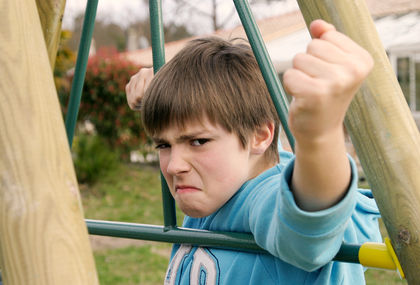
Children who have ODD are often disobedient. They are easily angered and may seem to be angry much of the time. Very young children with the disorder will throw temper tantrums that last for 30 minutes or longer, over seemingly trivial matters.
In addition, the child with ODD often starts arguments and will not give up. Winning the argument seems to be very important to a child with this disorder. Even if the youth knows that he or she will lose a privilege or otherwise be punished for continuing the tantrum or argument, he or she is unable to stop. Attempting to reason with such a child often backfires because the child perceives rational discussion as a continuation of the argument.
Most children with ODD, however, do not perceive themselves as being argumentative or difficult. It is usual for such children to blame all their problems on others. Such children can also be perfectionists and have a strong sense of justice regarding violations of what they consider correct behavior. They are impatient and intolerant of others. They are more likely to argue verbally with other children than to get into physical fights.
Older children or adolescents with ODD may try to provoke others by being deliberately annoying or critical. For example, a teenager may criticize an adult's way or speaking or dressing. This oppositional behavior is usually directed at an authority figure such as a parent, coach, or teacher. Youths diagnosed with ODD, however, can also be bullies who use their language skills to taunt and abuse other children.
Causes and symptoms
Causes
ODD has been called a problem of families, not of individuals. It occurs in families in which some or all of the following factors are present:
- Limits set by parents are too harsh or too lax, or an inconsistent mix of both.
- Family life lacks clear structure; rules, limits, and discipline are uncertain or inconsistently applied.
- At least one parent models oppositional behavior in his or her own interactions with others. For example, mother or father may get into frequent disputes with neighbors, store clerks, other family members, etc., in front of the child.
- At least one parent is emotionally or physically unavailable to the child due to emotional problems of the parent (such as depression), separation or divorce, or work hours.
The defiant behavior may be an attempt by the child to feel safe or gain control. It may also represent an attempt to get attention from an unresponsive parent.
There may be a genetic factor involved in ODD; the disorder often seems to run in families. This pattern may, however, reflect behavior learned from previous generations rather than the effects of a gene or genes for the disorder.
Symptoms
According to DSM-IV-TR , a diagnosis of ODD may be given to children who meet the following criteria, provided that the behavior occurs more frequently than usual compared to children of the same age and developmental level.
A pattern of negativistic, hostile, and defiant behavior lasting at least six months, during which four (or more) of the following are present. The child:
- often loses his or her temper
- frequently argues with adults
- often disregards adults' requests or rules
- deliberately tries to provoke people
- frequently blames others for his or her mistakes or misbehavior
- is often easily irritated by others
- is often angry and resentful
- is often spiteful
In order to make the diagnosis of oppositional defiant disorder, the behavioral disturbances must cause significant impairment in the child's social, academic or occupational functioning, and the behaviors must not occur exclusively during the course of a psychotic or mood disorder. In addition, the child must not meet criteria for conduct disorder , which is a more serious behavioral disorder. If the youth is 18 years or older, he or she must not meet criteria for antisocial personality disorder .
Demographics
Oppositional defiant disorder is thought to occur in about 6% of all children in the United States. It is more common in families of lower socioeconomic status. In one study, 8% of children from low-income families were diagnosed with ODD. The disorder is often apparent by the time a child is about six years old. Boys tend to be diagnosed with this disorder more often than girls in the preteen years, but it is equally common in males and females by adolescence.
It is estimated that about one-third of children who have attention-deficit/hyperactivity disorder (ADHD) also have ODD. Children who have ODD are also often diagnosed with anxiety or depression.
Diagnosis
Oppositional defiant disorder is diagnosed when the child's difficult behavior lasts longer than six months. There is no standard test for diagnosing ODD. A full medical checkup may be done to make sure that there is no medical problem causing the child's behavior. The medical examination is followed by a psychological evaluation of the child, which involves an interview with a mental health professional. The mental health professional may also interview the child's parents and teachers. Psychological tests are sometimes given to the child to rule out other disorders.
Evaluation for ODD includes ruling out a more disruptive behavioral disorder known as conduct disorder (CD). CD is similar to ODD but also includes physical aggression toward others, such as fighting or deliberately trying to hurt another person. Children with CD also frequently break laws or violate the rights of others, for example by stealing. They tend to be more covert than children with ODD, lying and keeping some of their unacceptable behavior secret.
The diagnosis of ODD may specify its degree of severity as mild, moderate, or severe.
Treatments
Treatment of ODD focuses on both the child and on the parents. The goals of treatment include helping the child to feel protected and safe and to teach him or her appropriate behavior. Parents may need to learn how to set appropriate limits with a child and how to deal with a child who acts out. They may also need to learn how to teach and reinforce desired behavior.
Parents may also need help with problems that may be distancing them from the child. Such problems can include alcoholism or drug dependency, depression, or financial difficulties. In some cases, legal or economic assistance may be necessary. For example, a single mother may need legal help to obtain child support from the child's father so that she won't need to work two jobs, and can stay at home in the evenings with the child.
Behavioral therapy is usually effective in treating ODD. Behavioral therapy focuses on changing specific behaviors, not on analyzing the history of the behaviors or the very early years of the child's life. The theory behind behavioral therapy is that a person can learn a different set of behaviors to replace those that are causing problems. As the person obtains better results from the new behavior, he or she will want to continue that behavior instead of reverting to the old one. To give an example, the child's parents may be asked to identify behaviors that usually start an argument. They are then shown ways to stop or change those behaviors in order to prevent arguments.
Contingency management techniques may be included in behavioral therapy. The child and the parents may be helped to draw up contracts that identify unwanted behaviors and spell out consequences. For example, the child may lose a privilege or part of his or her allowance every time he or she throws a temper tantrum. These contracts can include steps or stages—for example, lowering the punishment if the child begins an argument but manages to stop arguing within a set period of time. The same contract may also specify rewards for desired behavior. For example, if the child has gone for a full week without acting out, he or she may get to choose which movie the family sees that weekend. These contracts may be shared with the child's teachers.
The parents are encouraged to acknowledge good or nonproblematic behavior as much as possible. Attention or praise from the parent when the child is behaving well can reinforce his or her sense that the parent is aware of the child even when he or she is not acting out.
Cognitive therapy may be helpful for older children, adolescents, and parents. In cognitive therapy, the person is guided to greater awareness of problematic thoughts and feelings in certain situations. The therapist can then suggest a way of thinking about the problem that would lead to behaviors that are more likely to bring the person what they want or need. For example, a girl may be helped to see that much of her anger derives from feeling that no one cares about her, but that her angry behavior is the source of her problem because it pushes people away.
Although psychotherapy is the cornerstone of treatment for ODD, medicine may also be helpful in some cases. Children who have concurrent ADHD may need medical treatment to control their impulsivity and extend their attention span. Children who are anxious or depressed may also be helped by appropriate medications.
Prognosis
Treatment for ODD is usually a long-term commitment. It may take a year or more of treatment to see noticeable improvement. It is important for families to continue with treatment even if immediate results are not apparent.
If ODD is not treated or if treatment is abandoned, the child has a higher likelihood of developing conduct disorder. The risk of developing conduct disorder is lower in children who are only mildly defiant. It is higher in children who are more defiant and in children who also have ADHD. In adults, conduct disorder is called antisocial personality disorder, or ASD.
Children who have untreated ODD are also at risk for developing passive-aggressive behaviors as adults. Persons with passive-aggressive characteristics tend to see themselves as victims and blame others for their problems.
Prevention
Prevention of ODD begins with good parenting. If at all possible, families and the caregivers they encounter should be on the lookout for any problem that may prevent parents from giving children the structure and attention they need.
Early identification of ODD and ADHD is necessary to obtain help for the child and family as soon as possible. The earlier ODD is identified and treated, the more likely it is that the child will be able to develop healthy patterns of relating to others.
Resources
BOOKS
Hales, R. E., S. C. Yudofsky, J. A. Talbott, eds. Textbook of Psychiatry. 3rd ed. Washington DC: American Psychiatric Press, 1999.
Sadock, B. J., and V. A. Sadock. Kaplan & Sadock's Comprehensive Textbook of Psychology, 7th ed. Philadelphia: Lippincott Williams and Wilkins, 1999.
PERIODICALS
Loeber, Rolf. "Oppositional defiant and conduct disorder: a review of the past 10 years, part I." Journal of the American Academy of Child and Adolescent Psychiatry Dec. 2000.
ORGANIZATIONS
American Academy of Child and Adolescent Psychiatry. 3615 Wisconsin Avenue, NW, Washington, DC 20016-3007.(202) 966-7300. Fax: (202) 966-2891. <www.aacap.org> .
Jody Bower, M.S.W.
At school they suspend him and he is well on his way to failing his 1st year of highschool. Kids today know all the legal rights they have and they use them against authorities, laughing at them all saying "you can't maka me do nothing I don 't want to do".
"Starve the kid" some have suggested, like that is not asking to be charged with neglect. Other suggestions "put him in sports or something to keep him occupied". To which Rene says "sports are gay, I just want to chill with my friends" (and smoke pot and play vedeo games and jam).
5 years sinse separations now, Rene was living with his dad, mom has applied 3 times now for disability due to all the trauma from this separation following a bad 20 year marriage. Rene's dad lately kicked him out, Rene went to live with mom but was thretning her and abusing her emotionaly and physicly so she locked him out and Rene is noe temporary living at his uncle.
In 2 month his uncle says he is no longer going to keep Rene so noiw what? I love my son, I just cannot "handle" him, he needs a REAL father. His father neglecting him over 5 years now is what I believe is the major cause of Rene's ODD but dad cares more about trying to keep from going bankrupt again then his son's life.
You have an answer for that, I beg you do tell. We live in Ontario.
After that everything she objected to. She has remained in a somewhat babified stage and is in somewhat of an imaginary world. One doctor said it was post traumatic stress syndrome. She couldn't talk when she was little so she couldn't tell me and they won't do anything because she is delayed. What a sin, developmentally delayed children really don't have the same rights as others. I don't blame her for being angry. Myself as well. She is very fond of her swear words & I hate you's. The problem is it's what gets in her own way of changing & learning everything. She loves people though & desparately wants friends. It breaks my heart. She needs special help, but none is available because is is delayed.